
In a move to plug gaps in the Insolvency and Bankruptcy Code (IBC), the ministry of corporate affairs (MCA) has proposed robust norms against avoidance transactions, wrongful trading, and inordinate delays via changes to look-back period and fixed timelines for the tribunals to reject or approve plans, among other measures. The MCA has proposed that the IBC should provide the adjudicating authority with 30 days for approving or rejecting a resolution plan under Section 31. If a decision is not made on the resolution plan within that period, the adjudicating authority will record reasons in writing for the same, the ministry has proposed.

'There is no emergency of a third wave that we are rushing for booster doses.'

'We have to ensure the European situation does not occur in India and we don't see a spread like theirs.'

The share of total health expenditure as part of the gross domestic product (GDP) went down to 3.3 per cent in 2017-18 from 3.8 per cent in the previous two years, according to the national health account data released on Monday by the health ministry. The share of government expenditure as part of total expenditure as well as GDP has gone up from from 3.78 per cent to 5.12 per cent between 2013-14 and 2017-18, which could also explain a decline seen in out of pocket expenditure in 2017-18. Health ministry also emphasised the increase in the government health expenditure as part of the total GDP from 1.15 per cent in 2013-14 to 1.35 per cent in 2017-18.

'Antiviral treatment will have no change. Spike protein change may affect the immunity protection.'
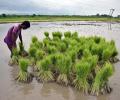
Among the key demands of agitating farmers has been a legal guarantee on minimum support price (MSP). The protest reached a crescendo when thousands of farmers from Punjab and elsewhere marched towards Delhi late last year and decided to block the main entry points once they were denied entry. The Centre, on its part, held 11 rounds of discussions with the protesters and even offered to amend some of the provisions without much success. With now one of their chief demands met, farmers have now moved on to force the government to concede on MSP.
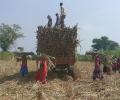
Nitin Tyagi is a young farmer in Budhagaon village of Baghpat district of Uttar Pradesh. A few years ago, Tyagi left his fairly lucrative job in the medical industry and shifted base to his ancestral village to look after his land and property. He opened a small shop selling farm inputs in the village and also started taking a greater interest in agricultural matters which had so far been looked after by his father and uncles. Tyagi and his brothers primarily grow sugarcane, potato and wheat on nearly 10 acres of land with sugarcane taking up most of his time and effort. Being one of the most important and lucrative cash crops of the region, sugarcane is directly linked to the fate of millions of farmers in west UP and with it, the electoral fortunes of political parties seeking their votes in the coming assembly polls.
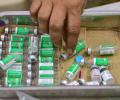
With around 2 million Covid vaccine doses likely to get wasted in December, leading hospital chains have now started to give it gratis to citizens. Sohini Das and Ruchika Chitravanshi report.
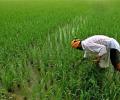
Gross value added in agriculture and allied activities clocked a healthy growth rate of 4.5 per cent at constant prices in the second quarter of FY22, up from 3 per cent during the same period last fiscal year and 3.5 per cent in Q2 of 2019-20. In the first quarter of FY22, gross value added in the sector was also 4.5 per cent. Growth in current prices was also a healthy 7.9 per cent in July-September 2021-22, up from 7.3 per cent in the same quarter last fiscal year. It was slightly less than the 8.7 per cent of the second quarter of 2019-20.
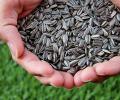
The Centre, after the repeal of the farm Acts, may bring in another important piece of legislation concerning farmers in the form of the long-pending Seeds Bill. This will be in the ogoing winter session of Parliament. Sources said the draft Seeds Bill, in the way it was prepared in 2019, sought to overcome several of the shortcomings of the Seeds Bill of 2004, which was proposed to replace the Seeds Act of 1966. However, the 2004 Bill could not be cleared owing to deficiencies in it.

'As far as contract farming is concerned, we already have a model Act and states will be encouraged to adopt them.'
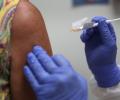
The Union health ministry has directed states to identify all left-out people and ensure everyone gets their Covid jab through initiatives such as workplace vaccination, as part of the government's "Har Ghar Dastak" campaign. Health Minister Mansukh Mandaviya held a review meeting on vaccination progress with Manipur, Meghalaya, Nagaland and Puducherry on Monday. In a tweet, the minister said, "Spoke about augmenting Govt's #HarGharDastak vaccine campaign. Requested help from religious leaders, NGOs & political groups to speed-up vaccination coverage." Health secretary Rajesh Bhushan has asked state officials that workplace vaccination should be organised for targeting people due for their doses.
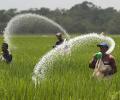
Enthused by rising potato prices after a prolonged slump, Pradeep Sharma was planning to sow the crop on his 15-acre farm near Agra slightly earlier than usual. The delayed departure of the southwest monsoon also prompted his decision, since the good soil moisture would have saved at least one initial irrigation. But the acute shortage of diammonium phosphate (DAP), a crucial nutrient ahead of the sowing season for potatoes, nipped those hopes in the bud. DAP is the second-most used fertiliser in the country after urea.
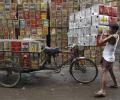
In order to check the abnormal surge in edible oil prices during Diwali festivities, as many as 18 states are in the process of imposing stock holding limits on oilseeds and edible oils after being empowered by the Centre for doing so. Of the 18 states that are in the process of imposing stock limit on my edible oils apart from UP, include Rajasthan, Gujarat, Maharashtra, Odisha, Kerala, Jharkhand, Chhattisgarh, Andhra Pradesh, Tamil Nadu, Tripura and the Union Territory of Chandigarh. Of the 18, Uttar Pradesh, has already imposed stock limits on edible oils, the Centre was informed with as many as 23 states to discuss ways and means to ensure further easing of edible oil prices.
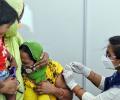
Experts, however, feel that given the intensity of the second wave and the high single dose coverage, India is in a good position to avoid any drastic wave in the near future.

Lack of clarity on data-sharing persists, public health experts sceptic about the pilot that was run in six Union territories as benchmark for national roll-out

'Demand is wonderful. We have crossed 10 million on many days.' 'The Swedish trade commissioner recently said, "You guys are vaccinating the entire Sweden in one day".'
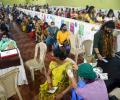
With the maximum dose gap of four months for Covishield, a large part of the population would not even be eligible for the second dose by the end of this year, report Ruchika Chitravanshi and Ishaan Gera.

The government said it had received many representations seeking extension of time citing many difficulties due to the second wave of Covid-19 and the subsequent lockdowns. MCA has asked the registrar of companies to approve the extension of the time limit to hold the AGM.

Monsoon in August was almost 24 per cent below normal, which was the sixth driest August since 1901. It came on the back of a 7-per cent monsoon shortfall in July.
 © 2026 Rediff.com - Investor Information - Advertise with us - Disclaimer - Privacy Policy - Sitemap - Feedback - About us - Terms of use - Grievances